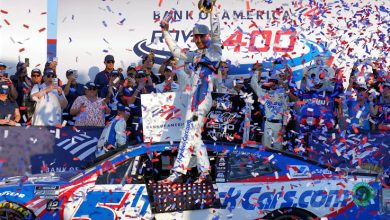

If Dale Earnhardt Were Still Here, He’d Have Backed Bubba Wallace as a DEI Driver and Stood Against the Hate
Bubba Wallace: A DEI Driver Standing Against Hate
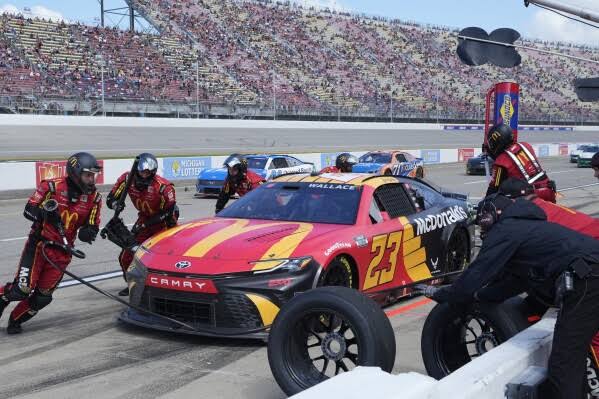
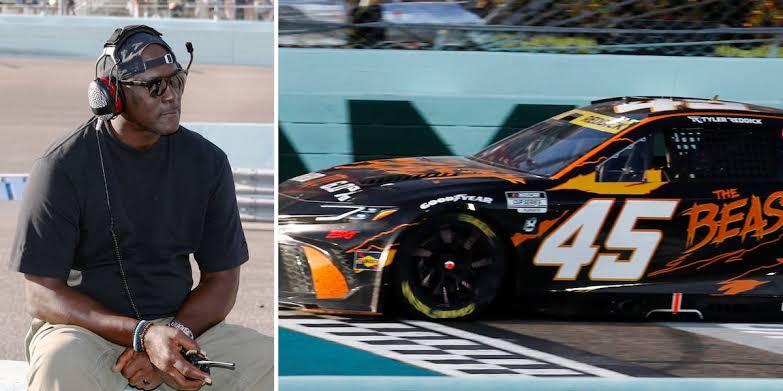
In the ever-evolving landscape of sports, few figures have captured the attention and respect of fans and fellow athletes alike as decisively as Bubba Wallace. As a driver for 23XI Racing, co-owned by Michael Jordan and Denny Hamlin, Wallace has become a prominent advocate for diversity, equity, and inclusion (DEI) within NASCAR. But more than just his role as a NASCAR competitor, Wallace has utilized his platform to stand against hate and racism, positioning himself as a significant voice in both motorsports and society.
The Rise of Bubba Wallace

Bubba Wallace’s journey through the ranks of NASCAR is one that embodies perseverance and determination. Born on October 8, 1993, in Mobile, Alabama, Wallace began racing go-karts at an early age, showcasing innate talent and an unyielding passion for the sport. He progressively climbed the ladder in racing, competing in various series, including late models, the NASCAR Camping World Truck Series, and the Xfinity Series. His breakthrough came when he became the first full-time African American driver in NASCAR’s top series since Wendell Scott in the 1970s.
Wallace made his debut in the NASCAR Cup Series in 2017, and since then, he has emerged as a formidable competitor. But his significance extends beyond the racetrack; he symbolizes hope, representation, and progress in a sport that has historically struggled with diversity.
Advocating for Diversity, Equity, and Inclusion
Bubba Wallace has been unwavering in his advocacy for diversity and inclusion within NASCAR. He understands that representation matters, especially in a sport where African American drivers have been scant. His presence on the track is a visual reminder of the progress being made but also a call to action for the sport to do more.
In June 2020, amidst a global conversation around racial equality and social justice following the murder of George Floyd, Wallace took a bold stand. He became one of the most visible faces in sports advocating against racism and discrimination when he called for NASCAR to ban the Confederate flag from its events. The Confederate flag, a deeply painful symbol of the system of racial oppression in the United States, had long been a controversial presence at NASCAR events. Wallace’s position on this issue was not only personal but also resonated with a broader movement demanding change within institutions often seen as resistant to diversity.
When NASCAR announced the ban on the Confederate flag later that month, it marked a watershed moment in the sport’s history, and Wallace emerged as a catalyst for this significant change. “We cannot stand for anything that puts any type of hate or negativity in the world,” he stated in a heartfelt message, emphasizing the need for solidarity among all competitors and fans.
Standing Against Hate
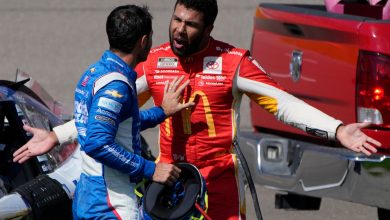
Bubba Wallace’s actions have not been without backlash. As he continued to push for change, he faced a wave of racially charged hate. This culminated in a very public incident in June 2020 when a noose was found in his garage stall at Talladega Superspeedway. The incident sent shockwaves throughout the NASCAR community and beyond; it became a profound symbol of the hate Wallace was fighting against.
Instead of shrinking from the spotlight or backing down, Wallace chose to galvanize the support of his fellow drivers and the broader NASCAR community, which rallied around him in an unprecedented show of unity. Prior to the race at Talladega, his peers and NASCAR officials showed solidarity by pushing his car to the front of the grid, a powerful display that transcended the boundaries of sport.
In a subsequent interview, Wallace expressed gratitude for the support but also articulated his feelings regarding the climate surrounding hate and ignorance in society. “The act of what I went through, it shows that we still have a long way to go,” he said, reaffirming his commitment to using his platform to combat hate.
The Influence of Representation
Wallace’s influence reaches far beyond the racetrack. His visibility as a Black driver in NASCAR serves as an inspiration to young athletes of all backgrounds who may feel marginalized in predominantly white sports. He has become a beacon of hope and change, showing that barriers can indeed be broken and that diversity can thrive in the world of motorsports.
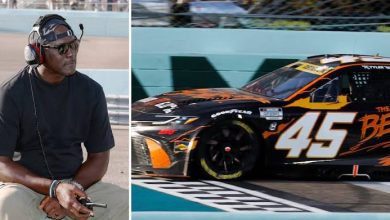
His partnership with 23XI Racing, which he co-owns with NBA legend Michael Jordan, epitomizes the importance of representation in leadership roles within the sport. Together, they are not only transforming the team racing culture but also fostering an environment that prioritizes inclusion and community engagement. The collaboration serves as a pioneering example of how sports figures can leverage their influence to create substantial societal change.
Community Engagement and Philanthropy
Beyond the track, Bubba Wallace has also dedicated his efforts to community engagement and philanthropy. He understands that combating hate and promoting diversity is not limited to actions on the racetrack; it’s also about giving back to the community. Wallace has been involved in various