” NASCAR Introduces ‘Driverless Race Cars.”
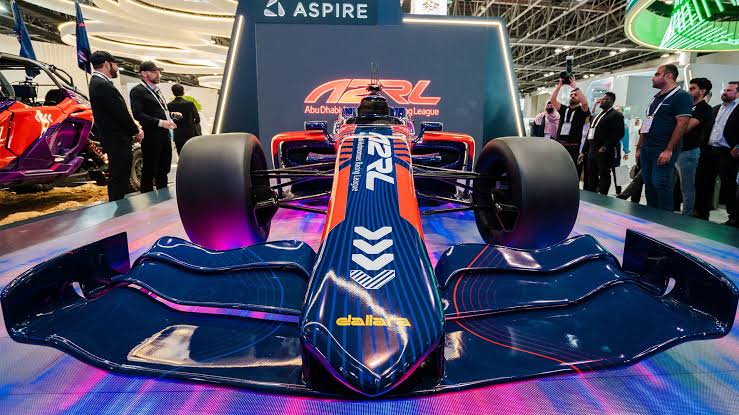
In a groundbreaking announcement that has sent shockwaves through motorsport circles, the National Association for Stock Car Auto Racing (NASCAR) has unveiled plans to introduce driverless race cars in an innovative pilot program set to launch next season. This revelation has sparked intense debate among fans, teams, and industry experts alike, raising questions about the future of racing and the implications of artificial intelligence (AI) in a sport long defined by human skill and endurance.
The Announcement That Shook the Racing World
The news broke during NASCAR’s annual press conference, where officials detailed a partnership with several leading tech companies specializing in autonomous vehicle technology. These collaborations aim to develop a fleet of self-driving cars equipped with advanced AI systems designed to mimic the decision-making skills of professional drivers. While the prospect of driverless racing may seem futuristic, advancements in AI and robotics have pushed the boundaries of what was once thought to be unachievable.
NASCAR’s bold initiative aims to enhance safety, reduce costs, and engage a new generation of fans who are increasingly captivated by technology. “Our goal is to create an exhilarating experience that marries the thrill of racing with the cutting-edge advancements in technology,” said NASCAR CEO Ben Kennedy. “With the growing influence of AI in various sectors, we believe it’s time to explore how this can elevate our sport.”
The Technology Behind Driverless Racing
At the heart of this venture lies the promising yet complex realm of AI and machine learning. The technology will utilize an array of sensors, cameras, and LiDAR (Light Detection and Ranging) systems, enabling the car to interpret its surroundings in real-time. Each vehicle will be equipped with a sophisticated AI that has been trained on data from thousands of races, learning to anticipate race dynamics, make split-second decisions, and execute maneuvers that even the best drivers might find challenging.
Moreover, teams are exploring the possibility of integrating virtual reality (VR) elements into the fan experience. Spectators could don VR headsets to witness the race from a driver’s perspective, creating a whole new dimension of engagement with the sport. As the cars adapt and learn from countless simulated races, fans can look forward to watching AI battle it out on the track, pushing the boundaries of speed and efficiency.
Mixed Reactions from Fans and Stakeholders
The announcement, however, has not been without controversy. Many longtime NASCAR fans express apprehension over the implications of a technological takeover in a sport that has traditionally celebrated human prowess. “What’s the point of racing if there’s no driver behind the wheel?” commented noted NASCAR historian and author, Michael Smith. “The drama, the skill, the unpredictability—it all comes from the human element. Removing that takes away what makes racing so special.”
Team owners and drivers are also weighing in on the discussion. While some view the innovation as an opportunity to attract younger viewers and modernize the sport, others fear it might erode the competitive spirit that defines NASCAR. Veteran driver Dale Earnhardt Jr. stated, “I think there’s a fine line between embracing technology and losing what makes us who we are as racers. I’m all for progress, but we need to tread carefully.”
- A Look Ahead: The Future of NASCAR
As NASCAR delves further into the world of driverless racing, it is clear that the future of the sport might see a hybrid model. While driverless races may offer a fresh spectacle, traditional races featuring human drivers are likely to remain a staple in the NASCAR lineup. This dual approach could cater to varying fan preferences, allowing those who cherish the human element of racing to continue enjoying the sport they know and love while attracting those who are curious about technology’s role in shaping the future.
One potential outcome could be a series dedicated to driverless racing, akin to Formula E’s electric vehicle racing series. NASCAR could carve out a niche that showcases cutting-edge technology while also maintaining races that celebrate the elite skills of human drivers. This model could promote diversity in racing formats, allowing fans to choose their preferred style of competition.
Safety First: A Key Motivation
Safety has long been a driving force behind advancements in motorsport technology. With the introduction of AI-controlled vehicles, NASCAR hopes to reduce the risk of accidents caused by human error. Training AI to avoid collisions and react to hazardous conditions has the potential to make racing safer for all involved. Officials have cited the significant number of crashes that occur during high-speed racing as a primary concern, stating that reducing these incidents could save lives.
By equipping cars with advanced safety features and predictive modeling, driverless technology aims to minimize accidents and enhance crew safety in the pit as well. The potential to reduce injuries offers a compelling argument for why NASCAR should pursue this new avenue despite concerns about the loss of the human element.
The Economics of Racing in the Age
The financial implications of driverless racing could also reshape the economic landscape of the sport. Teams spend millions annually on driver salaries, training, and insurance. With AI at the wheel, these costs could be significantly reduced, allowing teams to reallocate resources toward research and development, improving the technology that drives the sport forward. This could make it more accessible for smaller teams and newcomers to enter the NASCAR circuit, facilitating a resurgence of competition.
Moreover, the potential sponsorship opportunities arising from this technological shift are immense. With multinational tech companies eager to advertise their AI advancements, NASCAR could see an influx of funding and investment, bolstering its financial stability in an era where traditional advertising is rapidly changing.
### Conclusion: Embracing the Unknown
As NASCAR prepares to embark on this daring venture into the realm of driverless racing, the sport stands at a crossroads. The fusion of AI and automotive engineering promises an exhilarating new chapter, but it also poses significant questions about identity, tradition, and the human spirit of racing. While some fans remain skeptical, others eagerly await the dawn of a new era, wherein machines take to the asphalt and racing becomes a spectacle of speed, precision, and technology.
In the end, whether driven by humans or machines, the essence of racing lies in the pursuit of excellence, the thrill of competition, and the shared experiences that bind fans together. As NASCAR moves toward this uncharted territory, one thing is certain: the checkered flag will be waving in a future paved with possibilities.